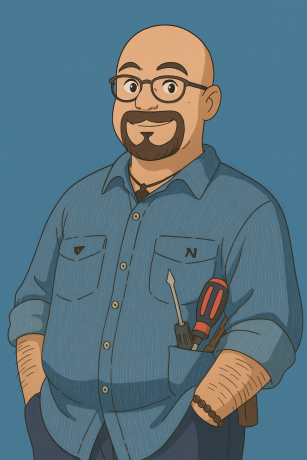
From Senior Developer to CTO: the career shift no one talks about Everyone loves to describe the transition from Senior Developer to CTO as a natural evolution.
Visionary leadership, strategy, innovation, long-term vision.
Elegant, reassuring words that ignore the uncomfortable truth: when you become a CTO, you stop doing the job you spent years mastering.
It’s not a promotion.
It’s a career change.
And almost no one prepares you for this shock.
When I Realized I Had Become a Micromanager (and Why It Became My Turning Point) I remember the scene perfectly.
It was a regular Thursday morning, one of those days when your calendar is just a list of fires to put out and the coffee is never enough.
My team was working on a new integration and we had a tight deadline to meet.
I was on a call, headset half crooked, one hand on the keyboard, rereading a PR for the third time—the same one I had already corrected five days earlier.
Production Incident Management: My Mental Checklist When something goes wrong in production, you need method, clarity, and above all, collaboration.
Over time, I’ve developed a mental checklist that helps me move in an orderly way, avoiding impulsive reactions and working in tandem with the team best suited to the situation.
In this article, I share my approach to incident management, organized into logical blocks that can be applied in any technical environment.
How I Evaluate a Senior Developer (Beyond Technical Skills) When I evaluate a senior developer, technical competence is only one of the variables—and often not the most important one. A senior developer, by definition, is someone who must be able to impact the team, the processes, and the company. This is why my evaluation method focuses on aspects that go far beyond code.
Soft Skills: the real value multiplier Soft skills are the foundation of everything.
Logs, Metrics, Traces: How I Think About Observability in a Distributed System How to check a system’s pulse and understand what is happening and where.
Measuring is controlling; the time invested in implementing logs is never wasted but the best possible investment.
Difference Between Debugging a Problem in a Monolith and in a Distributed System In the monolithic world, problem analysis is almost always a linear and predictable path: one codebase, one environment, one point of observation.
Leading the Team Through a Massive Refactoring Without Killing Delivery Navigating the stormy sea of refactoring without sinking uptime and delivery.
Trying to stay within sprint timelines without missing deadlines while doing deep refactoring and releasing new features is like walking on ice: every step might be the right one… or the one that cracks everything open.
Massive refactoring has a cruel characteristic: the value of the work is not visible until the end, while the costs are perceived immediately.
 Valerio's Cave